
In today’s rapidly changing digital landscape companies are always looking for new ways to convert visitors into leads and clients. A frequent and vital questions businesses and entrepreneurs are: Should I focus on a landing page, or create a complete website for greater results?
It’s not as easy choosing one option instead of the other. Success in conversion is contingent on your company’s goals as well as the intent of your audience as well as the source of traffic, and how each choice is developed and optimized. In this thorough guide, we’ll go over the advantages, differences and performance in real-world situations of landing pages as opposed to full websites. You can then be confident in deciding which one is more effective at conversion today.
Understanding the Core Difference
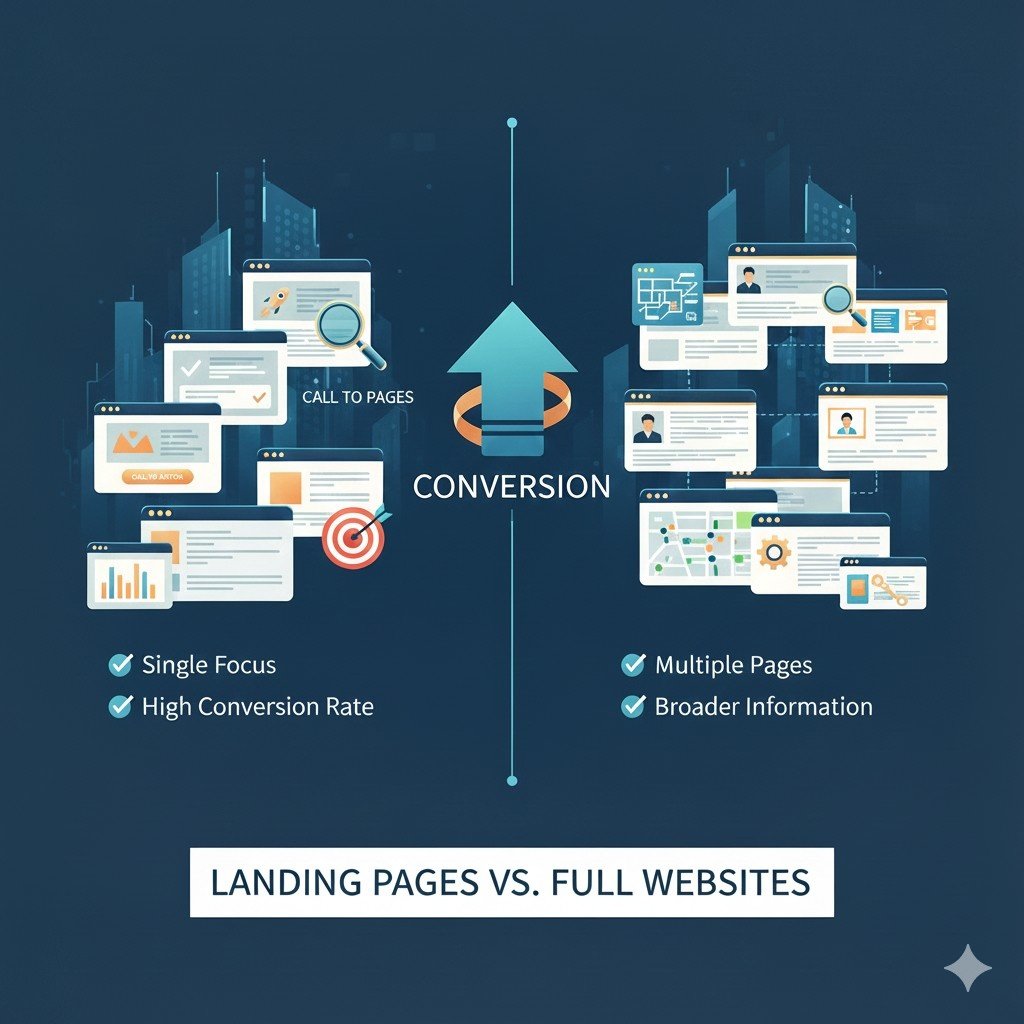
Before you compare conversions, it’s crucial to know what differentiates the website’s landing page from a web page.
What Is a Landing Page?
Landing pages are an one-page, specific page that is designed to fulfill a particular objective, like getting leads or promoting an offer or encouraging to sign-ups. Visitors are usually attracted by advertisements, email marketing campaigns, or via social media hyperlinks.
The key characteristics:
- A clear call-to-action (CTA)
- Very little navigation or none whatsoever
- Short, persuasive content
- designed to allow quick decision-making
What Is a Full Website?
A fully-fledged webpage comprises several pages, including About, Home Blog, Services and Contact. It gives users a complete brand experience and accommodates numerous user-experiences.
The most important characteristics are:
- Multiple points of conversion
- Brand storytelling
- SEO-driven content
- Scalability and long-term growth
Conversion Psychology: Why Structure Matters
The process of optimizing conversion rate (CRO) is akin to the psychology of users. The structure of your web presence is a major factor in how users behave.
Pages for landing work because:
- Eliminate distractions
- Aid users in making a single choice
- Reduce cognitive load
Full websites function because:
- Create trust through depth
- Answer broader questions
- Support research-driven buyers
Understanding the psychology of your audience is crucial when deciding what will convert better.
When Landing Pages Convert Better
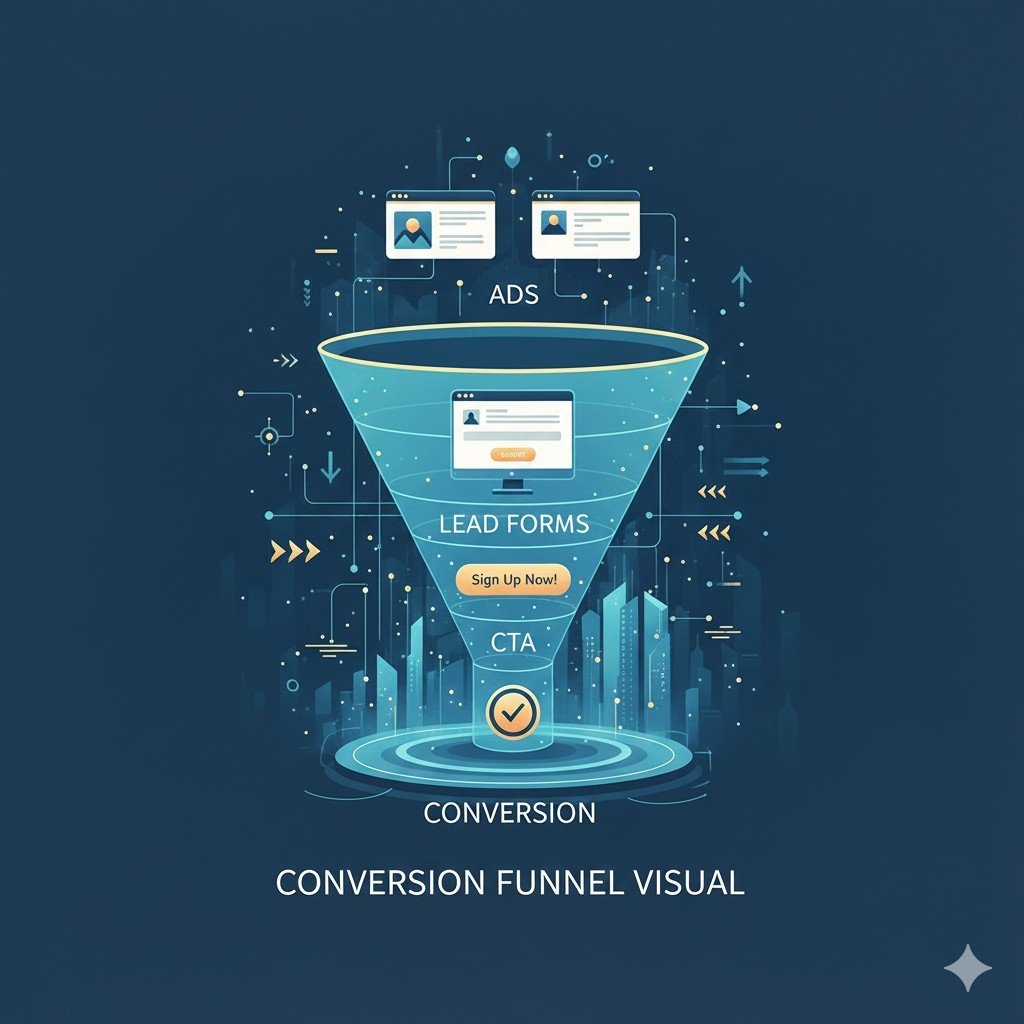
Landing pages can be powerful in converting visitors when they are used in the right way. This is when they perform better than the full website.
1. Paid Advertising Campaigns
Landing pages are consistently more effective in conversion to:
- Google Ads
- Facebook & Instagram Ads
- LinkedIn Ads
Why?
Ad traffic is great intent, but lacks patience. A landing page that is focused matches the ad’s message precisely and encourages users to take immediate actions.
2. Lead Generation & Offers
If your objective is:
- Free consultations
- Downloads of ebooks
- Webinar signups
- Discounts and discounts and offers
Landing pages are successful because they are focused on a single key point of differentiation and a single step.
3. Time-Sensitive Campaigns
Special-occasion sales or seasonal sales as well as launches of new products are all benefited by landing pages due to:
- The messaging is clear
- Urgency is obvious
- Conversions are more rapid
4. Testing & Optimization
Landing pages are great to test A/B
- Headlines
- CTAs
- Page layouts
- Offers
This allows for rapid optimization without affecting the whole web site.
When Full Websites Convert Better
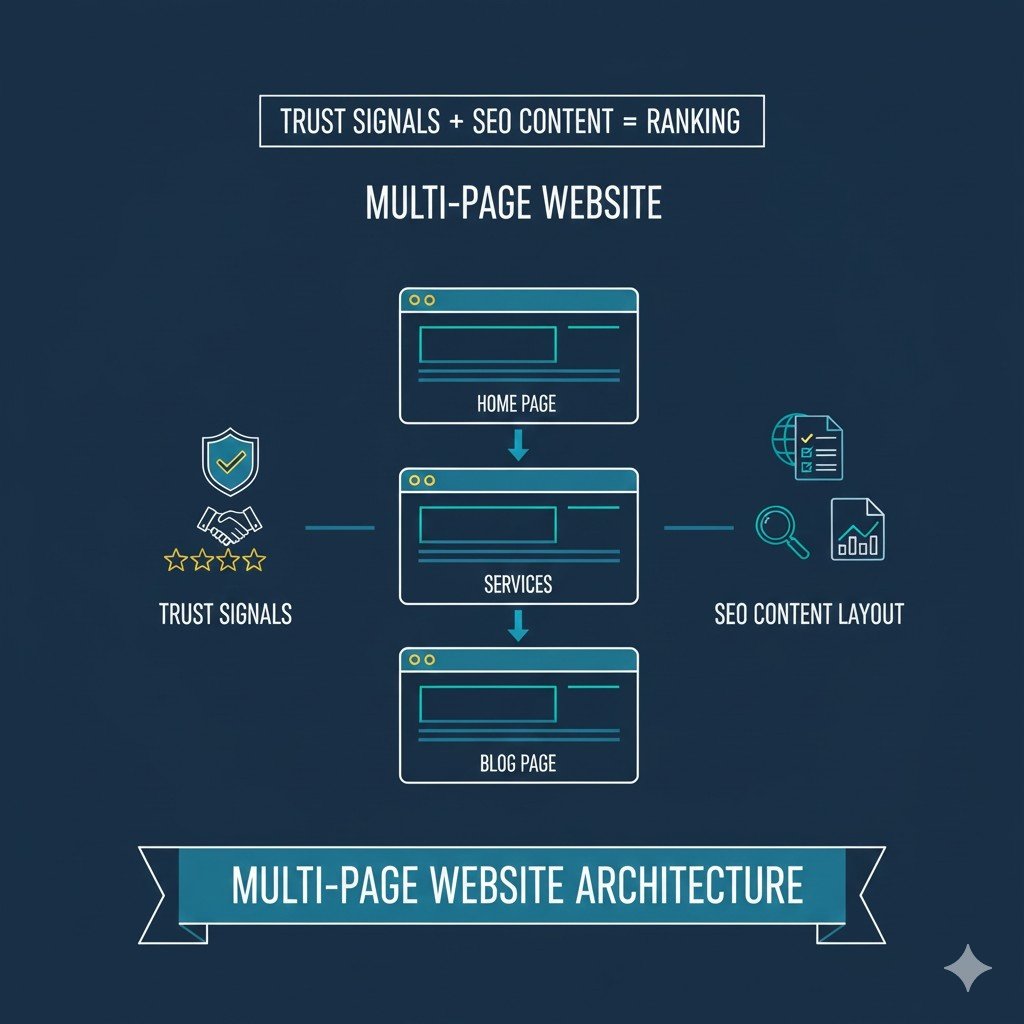
While landing pages are a hit in certain circumstances, full websites are dominant in other situations.
1. Long-Term Organic Traffic (SEO)
Users of search engines are often:
- Compare the various options
- Research firms
- Read multiple pages
A complete website supports:
- Blog content
- Service pages
- Internal link
- Authority for topical issues
Pages that are merely landing pages rarely compete in the SEO field long-term.
2. High-Trust or High-Ticket Services
For services like:
- Web development
- Legal services
- Medical services
- Consulting
The users want proof of credibility, trustworthiness, and the depth. A well-designed website can build trust by:
- Case studies
- Testimonials
- About pages
- Expertise content
3. Brand-Driven Businesses
If perception of brand is important then a complete site:
- Tells your story
- Communicates values
- It differentiates you from your competition
The landing pages are too small to provide a solid branding.
4. Multiple Conversion Paths
A website permits visitors to:
- Browse services
- Read blogs
- Contact sales
- Join newsletters
This can boost conversion rates over time, and is especially beneficial for visitors who have been returning.
Conversion Rate Comparison: Landing Pages vs Websites
Let’s take a look at the actual performance trends in the real world.
Average Conversion Rates
- Pages for landing: 5%-15% (sometimes higher)
- Full websites: 2%-5%
It doesn’t mean that landing pages will always be better, but it means that they are more effective in converting in each marketing campaign while websites prevail in terms of overall volume and durability.
SEO Impact: Which One Wins?
Landing Pages & SEO
Pros:
- Are able to rank for very specific keywords
- Ideal for local or campaign-based searches.
Cons:
- Limited content depth
- The authority of the day is not up to scratch.
- Not ideal for general keywords.
Full Websites & SEO
Pros:
- Ranking for a variety of keywords
- Establish authority over time
- Support marketing content
Cons:
- Slower to maximize
- Maintenance is more important
To ensure long-term search engine optimization, a complete site will be the definite winner.
User Experience (UX) & Conversion
Landing Page UX
- Simple
- Fast
- Goal-oriented
The perfect choice for people who know what they’re looking for.
Website UX
- Exploratory
- Informational
- Trust-focused
Ideal for users still deciding.
The most profitable businesses typically mix both.
The Hybrid Strategy: Best of Both Worlds
The latest conversion methods don’t make a choice between websites and landing pages, they employ both.
How It Works
- The website helps build trust with SEO, authority, and trust
- Pages for landing handle advertisements campaigns, lead generation
- The traffic is classified based upon the user’s intent
This method consistently provides better ROI than relying on just one.
Common Mistakes Businesses Make
- Utilizing a homepage for an example of a landing page
- Paying for traffic to generic site pages
- Mobile optimization is not being considered
- Not tracking conversions properly
- The choice of the landing page rather than creating a website
Making these errors averted dramatically increases conversion efficiency.
What Converts Better Now in 2026?
The answer is contingent on the intent:
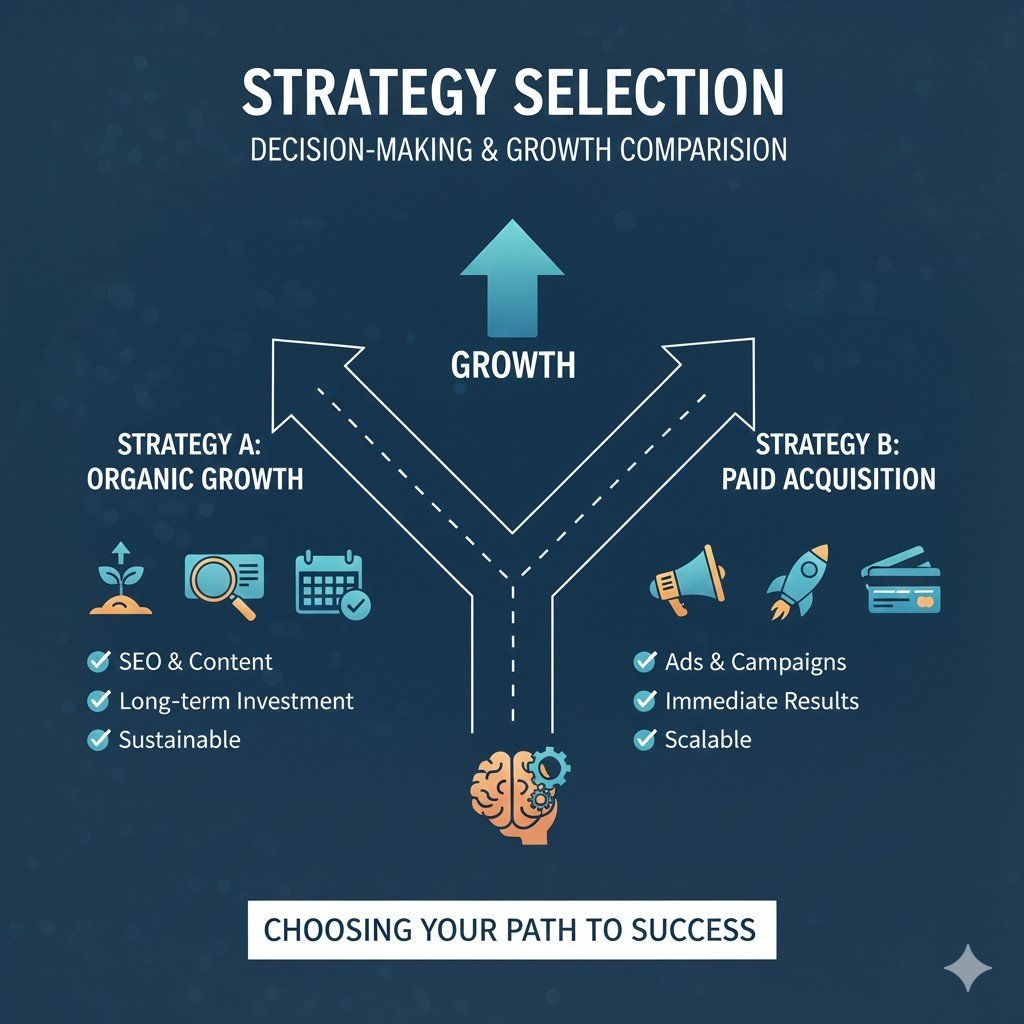
- High-intent, paid offer-based traffic Pages that land convert more efficiently
- Organic, research-driven, long-term traffic: Full websites convert better
- The best all-around strategy landing pages and an effective online presence
Companies that combine both experience the greatest growth and conversion rates.
Final Thought
Full websites and landing pages aren’t competitors, they’re partners.
Landing pages drive fast, focused conversions.
Websites create trust, authority and will continue to be successful for the long term.
If you are looking for sustainable growth, the most effective strategy is investing in an optimized conversion site that is backed by highly-performing landing pages that are tailored to your marketing campaigns.
FAQs: Landing Pages vs Full Websites
1. Can a landing page replace a website?
No. The landing pages are tools for campaigns and not full digital foundations.
2. Do landing pages aid in SEO?
They may be helpful for certain terms, but they are not a good choice for long-term SEO growth.
3. Do small-scale businesses need to start with an online landing page?
Yes, for rapid leads. However, they must eventually create an entire website.
4. Which one is better converting for ads?
The landing pages convert much better when it comes to paid traffic.
5. How much is it to keep them both in good condition?
Not necessarily. A solid website with some landing pages optimized offers great ROI.