
In 2026 the battleground for digital marketing is changing, and small-scale businesses in the local market are getting the advantage. Although big brands continue to dominate national marketing and broad organic search terms, Local SEO is slowly growing into the most effective growth avenue that is suited to small or medium-sized companies (SMBs).
Search engines aren’t only responding to the questions users are looking for. They’re now focusing on what, when and the people who are nearby to help today. This puts local businesses in a position to beat even the largest brands.
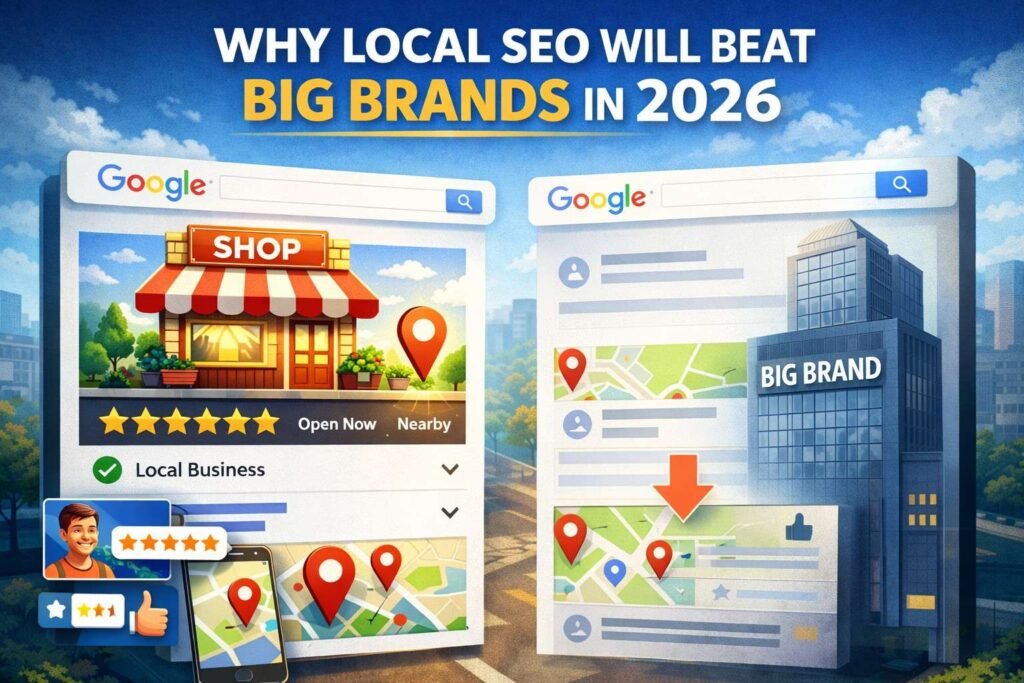
In this article we’ll look at how Local SEO can be able to beat major brands in 2026 and how Google’s advancing algorithms help small-scale enterprises, and what you can do to win locally–even having a tight budget.
What Is Local SEO (and Why It Matters More Than Ever)
The term “local SEO” refers to the method of optimizing your website’s presence to ensure that your business is visible in the results of local searches for example:
- “plumber near me”
- “best digital agency in Lahore”
- “emergency car recovery London”
Contrary to traditional SEO which focuses on national or global ranking, Local SEO focuses on the type of search in which users are prepared to take action.
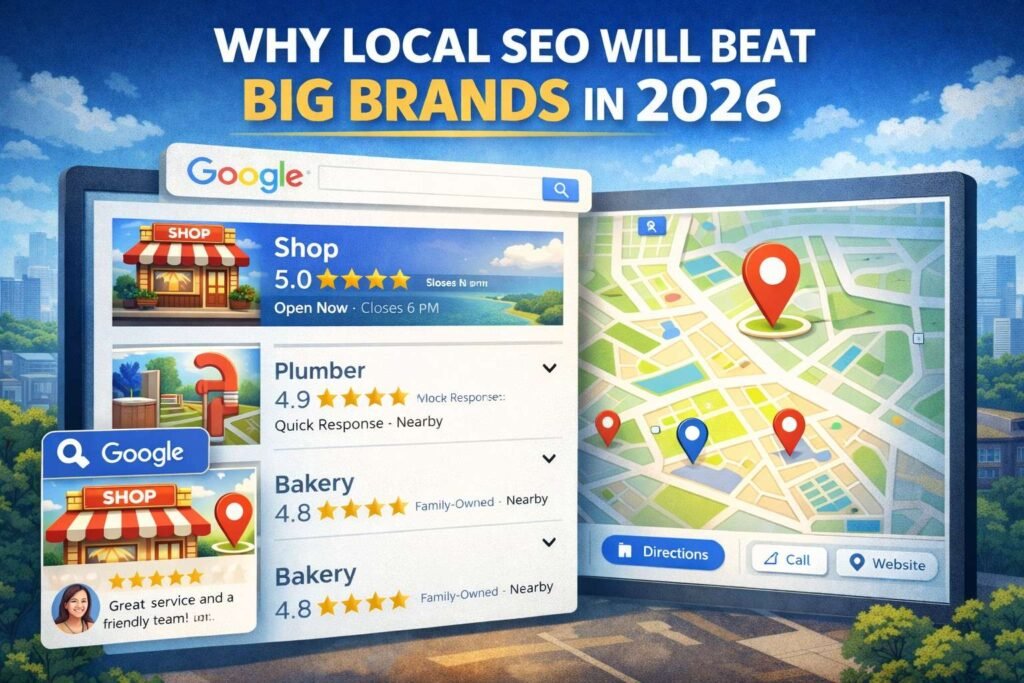
If you’re seeking a greater knowledge of how it process works in practice, this article about the local search engine optimization provides basics and the real-world strategies that businesses are employing to boost their local SEO.
The Shift in Search Behavior: Why Big Brands Are Losing Ground
1. “Near Me” Searches Are Exploding
Google says it has found that “near me” searches continue to grow year after year. By 2026, the mobile-first approach to indexing as well as AI-driven results indicate that the relevance of location is often greater than the credibility of a brand.
An electrician in your area with good reviews and a good location can beat an established national brand of home services simply because they’re more relevant.
Example:
A user looking for “emergency boiler repair near me” is displayed as follows:
- Google Maps listings
- Local profiles of local businesses
- Reviews and availability of service
Large brands that do not have a physical presence in the area are fighting with us.
2. Google Is Prioritizing User Intent, Not Brand Size
Google’s algorithm changes (including the AI powered Search Generative Experience) increasingly are focused on:
- Search intent
- Local importance
- Signals of trust (reviews nearness, accuracy, review)
This is the meaning of:
- A small-sized company with 50 positive local reviews could outperform
- A global brand that boasts thousands of backlinks that are generic.
Google will provide the most local solution rather than the largest company.
Why Local SEO Will Beat Big Brands in 2026
1. Proximity Beats Authority
In local search, distance matters.
Local ranking elements of Google place a high value on:
- Relevance
- Distance
- Prominence
Large brands usually fail when they are far away. Local businesses win, even in the event that it:
- Less backlinks
- A smaller website
- Lower domain authority
2. Google Business Profile Is a Game-Changer
Google Business Profile (GBP) listings dominate local search results by 2026.
Small businesses can reap the benefits of
- Appear in Google Maps
- Show pictures, reviews, services and opening times
- You can get calls even without visiting the website
Large brands typically manage GBPs on a large scale and this can result in:
- Inconsistent data
- Responses to reviews are slow and infrequent.
- Generic descriptions
Local firms On the other hand they can enhance and customize their online presence efficiently.
3. Reviews Are the New Ranking Currency
Reviews on the internet are not a requirement.
Rankings for local SEO heavily rely on:
- Review quantity
- Review quality
- Review freshness
- Responses from the owner
A small business that has:
- 100 recent 5-star reviews
- Actively reply
- Keywords related to location in the feedback
Can outperform national brands with generic or out-of-date reviews.
External source:
Google’s own documentation confirms that reviews are an indicator of trust
A trust signalGoogle Search Central – Local Ranking Factors
4. AI Search Favors Local Expertise
AI-driven search results provide information in accordance with the experience and authority in a particular context.
Local businesses are the most likely to win because they:
- Serve certain communities
- Be aware of local issues
- Make use of local language and examples
A brand’s generic content isn’t able to be compared to local relevance..
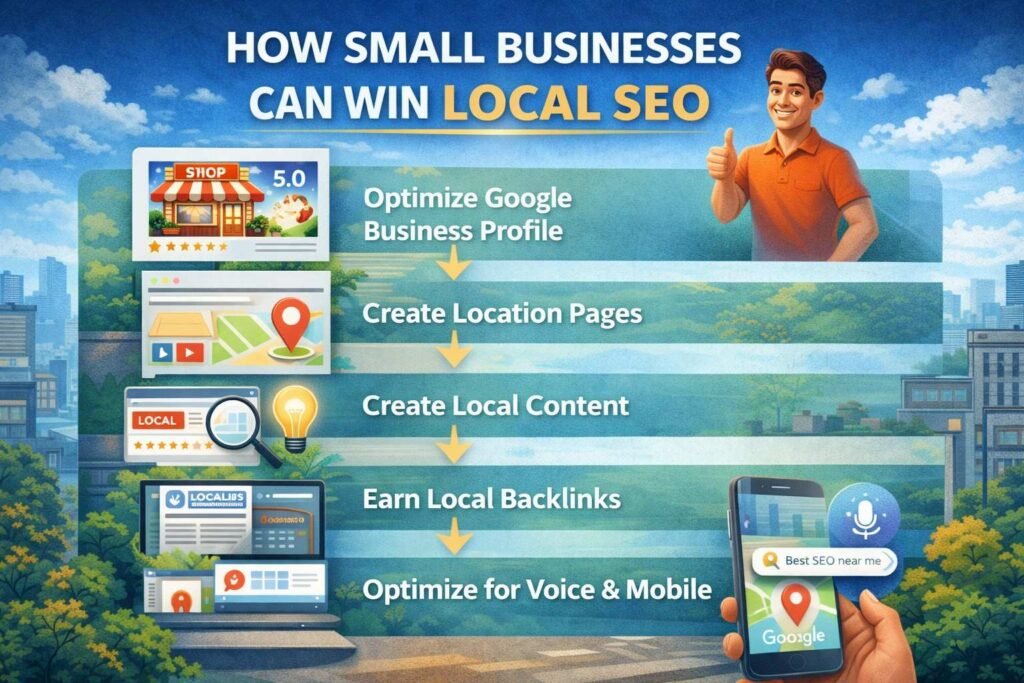
How small businesses can benefit by implementing local SEO by 2026
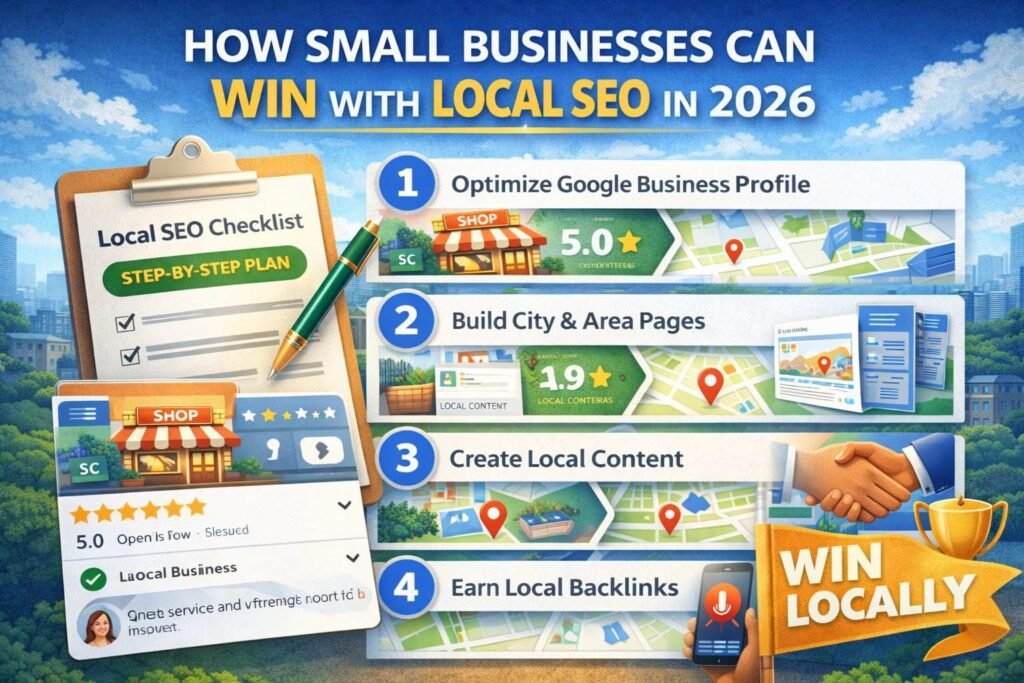
Step 1: Optimize Your Google Business Profile (GBP)
Your GBP can be the initial impression.
Must-do optimizations:
- Accurate NAP (Name, Address, Phone)
- Primary and secondary categories
- Local keywords in description of business
- Weekly uploads of photos
- Regularly scheduled posts (offers or updates, as well as occasions)
Internal link concept:
Link to a blog such as “How to Optimize Google Business Profile for Local Rankings” on your personal website.
Step 2: Build Location-Based Website Pages
Instead of one generic page, you can create:
- Pages pertaining to cities
- Pages that focus on specific regions
Example:
/seo-services-lahore//car-recovery-london//web-design-karachi/
Every page should contain:
- Local keywords
- Embedded Google Map
- Locally-based testimonials from local residents
- Internal links to blogs of service
Step 3: Create Local Content That Big Brands Can’t
Large brands have a hard time with personalization. There’s no need to.
Content ideas:
- “Best Places to Get [Service] in [City]”
- “Common [Problem] Faced by Homeowners in [Area]”
- “Local Case Study: How We Helped a Business in [City]”
This content increases the authority of the topic and also attracts local backlinks.
Step 4: Earn Local Backlinks (Not Generic Ones)
Don’t bother with spammy backlinks. By 2026 the local impact will outweigh volume.
Local backlinks with the best quality:
- Local news sites
- Chambers of Commerce
- Directories for business
- Local blogs
- Events and sponsorships
External link for example:
A local directory such as Yelp, Bing Places, or regional business listings.
Step 5: Optimize for Voice and Mobile Search
Voice searches can be:
- Local
- Conversational
- Action-based
Example:
“Who’s the best SEO consultant near me?”
Optimize to:
- Keywords in natural language
- FAQ sections
- Clear, concise and short answers
This will help you get noticed in prominent short snippets as well as AI summary.
Why big brands struggle with Local SEO
Big brands have to face problems like:
- Slow decision-making
- Strategies for generic content
- Poor location-level customization
- Automatization of reviews and listings
Small businesses, on the other hand, can:
- Respond quicker
- Adjust locally
- Develop real relationships with your customers
Agility is better than budget when it comes to local search.
Real-World Example: Small Business vs Big Brand
A local web-based agency that has been optimized for:
- Google Business Profile
- Local pages for service
- Customer reviews
Result:
- The pack was ranked #1 locally.
- Calls that were generated directly from Google
- National agencies that are ranked higher than those with larger budgets
This is the potential of local SEO when done correctly.
The Future of Local SEO Beyond 2026
The key trends that will shape the future
- AI-generated local summaries
- Reviewing has become more important and engagement
- Zero-click search via Google Maps or AI-generated results
- Local content visibility via hyper-local channels
Small companies that invest today will dominate local markets for many years.
Frequently Asked Questions (FAQs)
1. Small businesses can really compete with the big names in Google?
Yes. Local search results, proximity review, relevancy, and proximity are more important than the brand’s authority.
2. Does Local SEO cost a lot?
No. When compared to paid advertisements Local SEO is more cost-effective and produces long-term benefits.
3. How long will Local SEO take to work?
Typically, it takes 2-4 months to notice improvement, based on the level of competition and consistent.
4. Do I require a website to be able to use Local SEO?
A website can help but Google Business Profile alone can lead to leads and calls.
5. What’s the most significant Local SEO ranking factor in 2026?
Google Business Profile optimization and authentic reviews from customers.
6. What is the best frequency to review the local SEO strategy?
At minimum, every quarter and with regular content updates as well as review administration.
Final Thoughts: Local Always Wins When Done Right
The year 2026 will be the one in which the local SEO trend will not an option anymore, it’s a necessity.
Big companies may have cash However, small-scale businesses do not:
- Local expertise
- Community trust
- Real relationships
By focussing on the location as well as relevance and authenticity small businesses will not only compete but succeed..
When you put your money into the right Local SEO strategies now You won’t only survive the next era of search; you’ll rule it.