
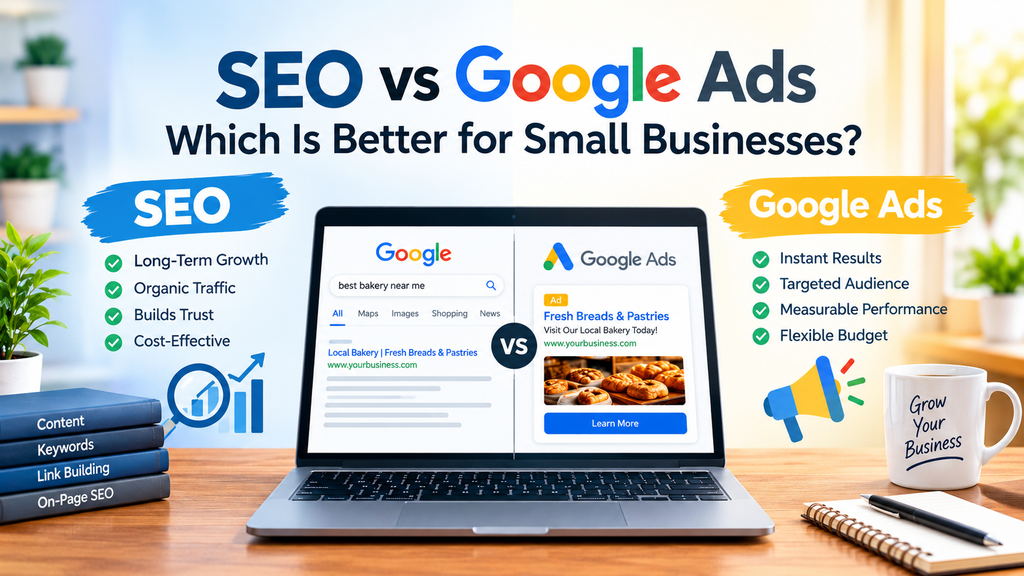
SEO vs Google Ads is an important decision for small businesses that want to increase website traffic, attract potential customers, and grow online. Both digital marketing strategies help businesses reach people through Google search, but they differ in cost, speed, and long-term benefits. Understanding how each strategy works can help business owners choose the right approach for their marketing goals and budget.
What Is SEO?
Search engine optimization (SEO) is the process of improving a website to increase its visibility in organic search results. When people search for products, services, or information related to your business, SEO helps your website become easier to discover.
SEO involves keyword research, high-quality content, technical improvements, internal linking, and website optimization. For example, a local business can create service pages that answer the questions potential customers search for online.
Benefits of SEO for Small Businesses
SEO offers several benefits for businesses that want sustainable online growth:
- Long-term visibility: Well-optimized pages can attract organic visitors over time.
- Cost efficiency: Businesses do not pay Google for every organic click, although SEO requires time and resources.
- Customer trust: Helpful content can establish credibility and answer customer questions.
- Local visibility: Local SEO helps businesses connect with customers searching for nearby services.
SEO requires patience because rankings are not guaranteed and improvements may take months. For more practical advice, read The Ultimate Guide to SEO for Small Businesses on Sam Locals.
What Are Google Ads?
Google Ads is an online advertising platform that allows businesses to promote their products and services in Google search results and other advertising placements. Businesses can select relevant keywords, set budgets, choose target locations, and create advertisements for potential customers.
For example, a cleaning company can advertise for searches such as “professional house cleaning services.” When its campaign is eligible and wins the relevant ad auction, its advertisement may appear in search results.
Benefits of Google Ads for Small Businesses
Google Ads offers advantages for businesses that need faster exposure:
- Quick visibility: Approved campaigns can begin attracting traffic soon after launch.
- Targeted advertising: Businesses can focus on relevant searches, locations, and audiences.
- Budget control: Advertisers can set spending limits and adjust campaign budgets.
- Performance tracking: Conversion tracking can help measure calls, enquiries, purchases, and other valuable actions.
However, Google Ads requires ongoing spending and careful management. When campaigns stop, the traffic generated by those advertisements generally stops too.
SEO vs Google Ads: Key Differences for Small Businesses
Understanding the differences between these two strategies makes it easier to decide which one fits your business.
1. Speed of Results
SEO is a long-term strategy. Improving content, website structure, and search visibility takes time, particularly in competitive industries.
Google Ads can generate paid visibility much sooner once campaigns are approved and configured correctly. It may be a suitable option for new businesses, limited-time promotions, or companies that need enquiries quickly.
2. Marketing Costs
SEO involves expenses such as content creation, technical optimization, and professional support. Although organic clicks do not carry a direct per-click advertising charge, SEO is not completely free.
Google Ads typically charges advertisers for clicks in pay-per-click campaigns. Costs depend on competition, bidding, keyword selection, and campaign performance.
When comparing SEO vs Google Ads, businesses should consider the cost of generating qualified leads rather than looking only at the initial marketing expense.
3. Long-Term Growth
SEO can build lasting organic visibility when businesses consistently maintain useful content and optimize their websites. Results can fluctuate because competitors, search algorithms, and customer behaviour change.
Google Ads provides more immediate control over campaign targeting and advertising messages. However, paid visibility generally depends on maintaining the campaign and its budget.
4. Customer Reach and Trust
SEO helps businesses reach people looking for information, comparing options, or searching for specific services. Useful content can build trust throughout the customer journey.
Google Ads can reach customers with strong buying intent, especially when advertisements match their search queries. Both channels can generate valuable leads when targeting, messaging, and landing pages are relevant.
When Should a Small Business Choose SEO?
SEO may be the better starting point when a business wants to build a reliable online presence over time.
It is particularly useful for businesses that can invest consistently in content, website improvements, and local visibility. Service providers can create informative pages that answer common questions and explain their expertise.
Practical SEO Tips
Small businesses can strengthen their SEO strategy by:
- Researching keywords that match customer needs.
- Publishing original and useful website content.
- Improving website speed and mobile usability.
- Creating relevant internal links between pages.
- Maintaining an accurate Google Business Profile where appropriate.
- Monitoring organic traffic and search performance.
For official guidance, consult Google’s SEO Starter Guide.
When Should a Small Business Choose Google Ads?
Google Ads may be a stronger choice when immediate visibility is a priority. A new business launching a service, for example, may not want to wait for organic rankings to improve before attracting potential customers.
Paid advertising can also help businesses test offers and discover which search terms produce qualified enquiries.
Before launching a campaign, establish a clear budget, select relevant keywords, create useful landing pages, and configure conversion tracking. Review results regularly and reduce spending on keywords that generate clicks without meaningful business outcomes.
Can SEO and Google Ads Work Together?
Yes. Combining both channels can provide short-term opportunities and long-term growth.
Google Ads can attract visitors while SEO efforts gradually improve organic visibility. Advertising data may also reveal which keywords and messages generate enquiries, helping businesses make better decisions about future content.
For example, a local service business could run a small advertising campaign for its main service while improving its website pages and publishing helpful articles. Over time, the business can compare the performance of paid and organic traffic.
However, using both channels is not essential for every company. Businesses with limited budgets should start with the strategy that best matches their immediate needs and expand when their results justify additional investment.
SEO vs Google Ads: Which Strategy Is Better?
The right choice depends on your goals, budget, competition, and timeline. SEO is generally better suited to building long-term organic visibility, while Google Ads can help businesses gain paid exposure more quickly.
If you need leads urgently, a carefully managed advertising campaign may be a practical starting point. If your priority is sustainable search visibility, SEO deserves consistent attention. Businesses with sufficient resources may benefit from combining the two approaches.
When deciding between SEO vs Google Ads, focus on qualified leads, actual sales, and return on investment rather than website traffic alone.
Ultimately, successful digital marketing depends on understanding your customers, communicating your value clearly, and improving your strategy based on measurable results. By choosing the right approach and monitoring performance, small businesses can strengthen their online presence and build a foundation for future growth.